Contact us

A paradox: abundant rainfall, yet early deficits

At first glance, winter 2025-2026 appeared reassuring, with above-average rainfall across much of the country.

However, this apparent recovery masks a more complex reality.

According to Imageau’s analysis, several major groundwater reservoirs are already showing deficits, particularly in:

  • Central France;
  • The north-west (including Brittany);
  • The Grand Est region.

This situation is largely explained by exceptionally high temperatures at the start of the year, which have increased evapotranspiration and limited effective groundwater recharge.

In other words, more rain does not automatically mean more available water.

An exceptionally warm start to 2026
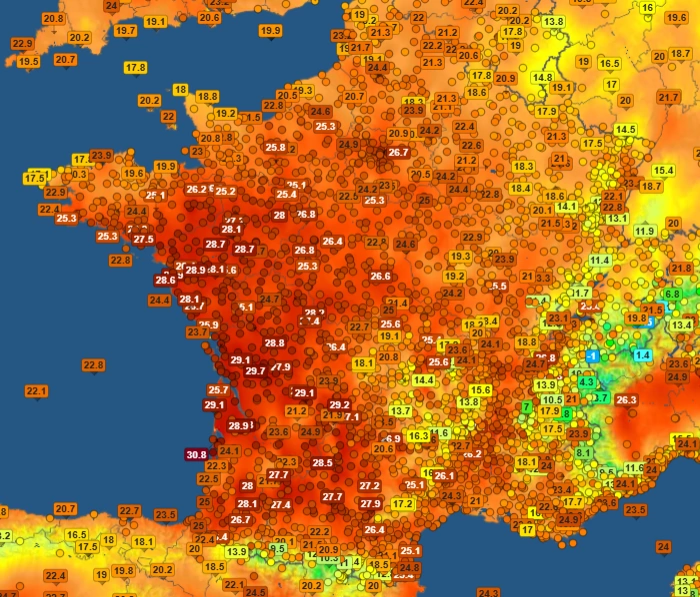
The first months of 2026 have already set the tone.

New temperature records were reached as early as April, with peaks close to 30°C in parts of northern France, highly unusual for the season. This follows a global trend, with 2024 and 2025 already among the hottest years ever recorded.

These conditions accelerate vegetation growth and significantly increase water demand from soils and ecosystems, further intensifying pressure on groundwater reserves.

Summer 2026: a high-risk scenario

Looking ahead, projections reinforce these concerns.

Based on forecasts from Météo France, there is a strong probability (around 50%) that the coming months will be hotter than seasonal norms. This raises the likelihood of a particularly hot spring and summer, with potentially severe consequences for water availability.

At a global scale, another major factor is at play: El Niño*. 

One of the most intense El Niño events ever recorded could develop in 2026, with sea surface temperature anomalies in the Pacific reaching up to +3°C.

This phenomenon acts as a global heat amplifier, increasing the probability of new temperature records worldwide, and further exacerbating hydrological stress.

* El Niño is a periodic climate phenomenon characterized by an abnormal warming of surface waters in the central and eastern Pacific Ocean, disrupting global weather patterns and often intensifying heat, droughts, and extreme events worldwide.

From observation to anticipation: the role of data

In this context, the ability to anticipate becomes critical.

Imageau’s expertise lies precisely in this forward-looking approach:

  • Monitoring groundwater levels in real time;
  • Analyzing trends and vulnerabilities;
  • Providing projections to support decision-making.

These insights are essential for both public authorities and industrial players, enabling them to prepare for tensions on water resources rather than reacting to crises.

Groundwater at the frontline of climate change

The findings from this first 2026 note confirm a broader reality: groundwater is one of the earliest and most sensitive indicators of climate change.

It reflects the combined effects of temperature, rainfall patterns and human usesn making it a critical resource to monitor and protect.

For Saur, this reinforces a key conviction: anticipating water stress is not optional. It is a prerequisite for ensuring service continuity, supporting local economies and strengthening territorial resilience.

Acting before the crisis

The signals identified by Imageau are clear.

Even in a year that began with favorable rainfall conditions, structural pressures linked to climate change are already visible, and likely to intensify in the coming months.

This calls for a shift in approach: from reactive water management to predictive, data-driven and territory-specific strategies.

Because when it comes to water, the real challenge is no longer just managing scarcity: t is anticipating it early enough to act effectively.